Cardiac apprehension does not provide you a rehearsal. When it occurs, the person who starts upper body compressions and makes use of an AED becomes the bridge between life and fatality. That truth is why certification matters. A CPR course with the best accreditation does more than hand you a card. It gives you a tested curriculum, credible evaluation, and the confidence that your abilities line up with current evidence and local requirements. I have actually trained wellness professionals, school staff, and parents for greater than a years. The difference between an approved cpr course and a generic workshop shows up when tension is high, the flooring is crowded, and a person's liked one is turning blue.
Accreditation, qualification, and recognition: the language that journeys individuals up
People usually blend three terms together as if they suggest the very same thing. They do not. Accreditation is the procedure through which an independent body evaluates a training carrier or a details program versus an approved requirement. Accreditation is the personal document you receive that claims you met the standard for a specified duration. Recognition is how companies, regulators, and insurance companies deal with that certification. You desire all three to align. A reputable first aid and cpr course is accredited to a published criterion, concerns a certification that clearly specifies the degree you accomplished, and is acknowledged by your employer or regulating agency.
Across nations, the bodies doing certification differ. In the USA, the American Heart Organization (AHA) and the American Red Cross rest at the center for CPR and Basic Life Assistance (BLS) programs, while some states add their very own requirements for child care workers or lifeguards. In Australia, Registered Training Organisations (RTOs) provide devices of expertise such as HLTAID009 Provide cardiopulmonary resuscitation and HLTAID011 Provide first aid under the nationwide structure. In the UK, the Resuscitation Council UK sets clinical guidelines, while Ofqual-regulated awarding organisations accredit several first aid courses. Similar patterns exist throughout Canada, New Zealand, and components of Europe, each with its very own mix of nationwide regulators and personal or philanthropic companies. If a provider can not clarify which criterion they align to and that audits them, maintain looking.

Why the badge on your certificate changes outcomes
Accreditation is not a tag for advertising duplicate. It drives the web content, the instructor's qualifications, the moment spent on hands-on practice, and the way your capability is assessed.

In one work environment I checked out, team had actually participated in a brief, non-accredited session sold as a "CPR awareness course." When a specialist collapsed months later on, the initial -responder was reluctant. She bore in mind an appealing acronym but had never pressed to the correct deepness on a manikin, and she was not sure regarding the price. The emergency services dispatcher needed to trainer her through every step. She did her best. But the spaces were obvious.
Contrast that with a storage facility group that had actually completed an accredited first aid and cpr course with a credible provider. 2 people recognized agonal breathing, started compressions within seconds, sent a jogger for the AED, and revolved every two minutes to preserve high quality. The AED delivered one shock on initial evaluation, and by the time paramedics showed Albion First Aid Course up, the individual had a perfusing rhythm. Skill practice session, realistic circumstances, and instructor feedback transformed the arc of that day.
Quality control is the peaceful power of accreditation. It standardizes the minimum hours on task, links the program to present resuscitation standards, and demands quantifiable performance standards. It likewise calls for documented risk administration for useful sessions, upkeep of equipment like AED instructors and adult, kid, and infant manikins, and moderated evaluations that maintain pass marks honest.
The core elements a certified CPR course should include
A qualified cpr training program does not drown you in theory, after that hurry the method. It stabilizes succinct scientific research with thorough rep. No matter the brand on the wall surface, look for these elements woven right into the program:
- Clear positioning to present resuscitation guidelines, with the publication year mentioned on materials. If a provider does not cite the standard variation, it is tough to know what you are learning. A defined extent, for instance grown-up CPR just, or adult, youngster, and infant CPR and choking administration. Your first aid certificate need to spell this out. Hands-on time with unbiased responses. Compression deepness and rate are not guesswork. Manikins with feedback devices or trainer tracking bring your strategy into the secure zone. AED usage that surpasses "transform it on." You must exercise pad placement on different type of body, secure clearing, and repairing typical problems like hair, sweat, or dental implanted devices. Assessment against released standards. You must understand what you have to demonstrate to pass. If no analysis is called for, you are not gaining a certification that indicates much.
A great company additionally establishes reasonable expectations around the cpr correspondence course interval. Most recognized programs are valid for 12 months for CPR abilities since psychomotor abilities degeneration rapidly. First aid devices that include hemorrhaging control, burns, and crack monitoring might hold for approximately three years in some regions, yet numerous workplaces still require annual refresher courses for CPR. Ask your employer or licensing body what tempo they expect, then match your booking to that cycle.
How accreditation differs by duty: public, office, and medical settings
The right training course is not the exact same for every learner. A parent who wants skills for the home requires different deepness than a paramedic pupil. The method is to select the level that matches your risk account and regulatory setting, without spending for components you do not need.
For the public, community CPR or first aid and cpr courses normally cover grown-up compressions and AED use, with a choice to add youngster and baby modules. Period runs 2 to four hours. The very best of these classes still maintain certification to nationwide guidelines, keep trainer ratios practical, and give an easy first aid certificate that a company would recognize.
Workplaces require to map training course selection to risks and duties. A low-risk workplace might only need a couple of team with recognized first aid training and a cpr course upgraded every year. A childcare facility, swimming pool, or manufacturing floor deals with greater danger. Child care regulatory authorities frequently require pediatric CPR including baby choking administration and anaphylaxis feedback. Aquatic centers want oxygen delivery and spine precautions. Construction may include trauma modules for significant bleeding and crush injury. Numerous employers partner with a service provider like First Aid Pro or comparable companies that can customize material while maintaining certification undamaged. That balance issues. If a personalized circumstance deviates from the certifying body's extent, the certificate could not meet audit requirements.
Clinical settings such as healthcare facilities and dental clinics generally mandate BLS or ALS/ACLS from particular recognizing companies, restored on an established timetable. The analysis is stricter. Anticipate two-person CPR method, bag-mask air flow, team communication, and scenario-based screening. If you are a clinician, inspect your board or medical facility credentialing office prior to you book. They frequently note the exact cpr courses they accept.
How to veterinarian a service provider past the logo design on the brochure
Logos can be licensed. Online reputation can not. When I assess a company for an organization or college, I look far past the heading brand name. I check teacher credentials, gear upkeep logs, evaluation rubrics, and student-to-instructor ratios. I read recent participant responses, not the best hits from 5 years ago. I call and ask hard concerns about their situation realistic look, AED technique, and how they sustain students who have a hard time. The solutions disclose culture.
A couple of specifics to confirm in plain language:
- Who approves your cpr training, and what guideline year do you comply with? Search for a clear, current referral to the local resuscitation council or equivalent. What is the instructor-to-student proportion throughout hands-on method? Proportions greater than 1:12 usually thin down comments. I go for 1:8 or much better for beginners, specifically when pediatric skills are included. Do you make use of feedback-enabled manikins? Devices that procedure deepness and price help learners correct mistakes promptly. Otherwise, what is your method for unbiased feedback? How long is the certification valid, and does it fulfill my market's recognition demands? Obtain this in writing, with course codes where suitable, such as HLTAID009 for Australian CPR units. What takes place if a student does not satisfy the requirement on the day? A severe provider uses removal or re-assessment options, not a quiet pass.
That short list mirrors what auditors ask when they review training documents after an event. It likewise reflects what students require for real proficiency: time, comments, and clear expectations.
The anatomy of a quality certificate
A first aid certificate or CPR card that stands up in an audit shares typical attributes. The company's lawful name and accreditation information show up in ordinary view. The course title and, where relevant, the nationwide device code are meant correctly. The range specifies adult, youngster, and baby protection when relevant, not just a common "CPR." The problem day and expiration or advised revival duration are both existing. The learner's full name matches government ID.
I have actually seen people turned away from job sites due to the fact that their certificate did not have a code or expiry. It is a preventable frustration. If you receive a digital certificate, make certain the PDF is proven by QR code or identification number. More employers currently cross-check authenticity since deceitful certifications circulate in some areas. Responsible carriers have accepted confirmation portals, which secure both students and employers.
Blended, on the internet, and in-person: what styles function and what to watch
Blended discovering has actually developed. Pre-course online modules can deliver theory effectively and cost-free class time for technique. When succeeded, this format enhances results since students arrive with a baseline vocabulary and can invest even more time with manikins and AED instructors. When done improperly, it comes to be a box-ticking exercise where individuals click with slides and presume test responses before the actual job begins.
Entirely on the internet CPR courses are not ideal for first qualification since CPR is a psychomotor ability. Reliable accrediting bodies insist on in-person assessment of compressions, ventilations where taught, and AED use. If a website assures a full first aid and cpr certificate without any hands-on element, be skeptical. Some areas enable online-only cpr refresher course web content for theory updates, but they still call for an in-person skills check within a defined window. Verify what your jurisdiction and market accept.
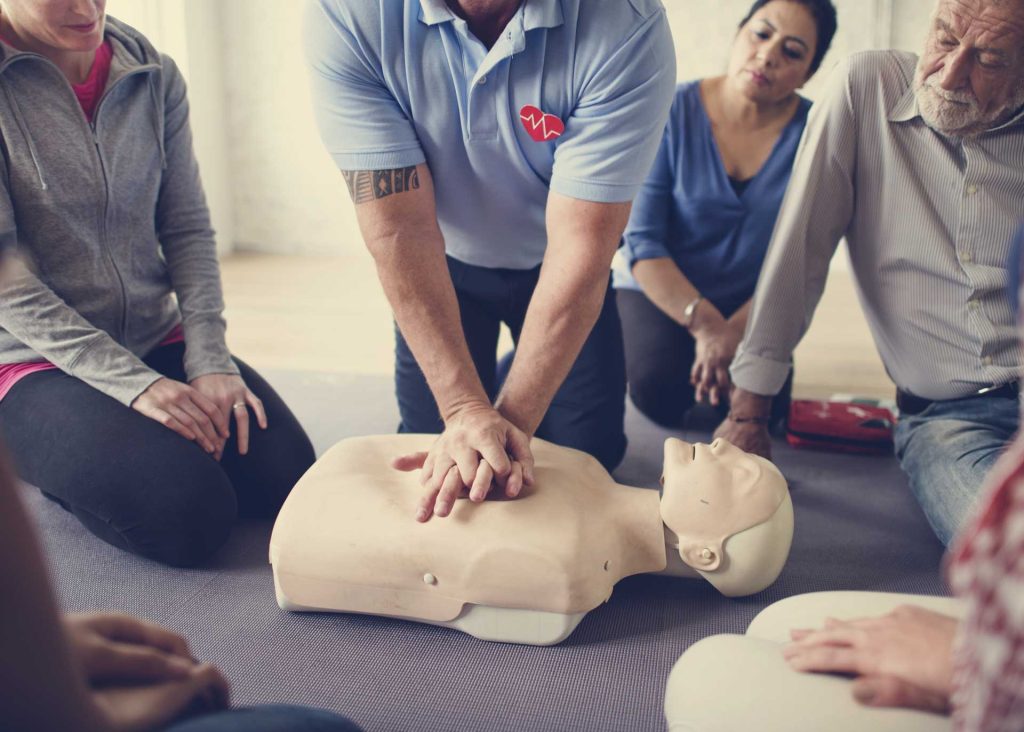
For in-person shipment, classroom setting matters. A cramped area with one grown-up manikin for twelve students types easy watching, not finding out. A well-run session revolves trainees with grownup, kid, and baby stations, and integrates practical barriers. For instance, practicing AED pad positioning around a transdermal spot or implanted pacemaker mark prepares you for what happens in the field. Running a situation in a corridor educates you to take care of onlookers and environmental hazards. These details are not fluff. They form muscle mass memory and judgment.
How standard updates surge into course quality
Resuscitation standards update on a five-year cycle in lots of countries, with acting advisories as proof advances. Modifications are usually refined rather than remarkable. Focus may change to minimize disruptions in compressions, fine-tune hand placement, or broaden referrals on when to stop resuscitation. Approved companies upgrade their curriculum, analyses, and instructor training when guidelines transform. That procedure takes job and investment.
I bear in mind the transition when comments devices came to be more usual. Initially, some teachers resisted, suggesting that their experienced eye sufficed. After that they saw the data. Many learners that looked skilled were under compressing by a centimeter or fatiguing early. The devices did not change teachers. They equipped them. Approved programs embraced the innovation quicker because their audit structures compensated objective dimension. Non-accredited workshops lagged, and their students paid the cost in lower-quality compressions when it counted.
When you renew your cpr certification, ask what has actually altered since your last course. A thoughtful teacher will certainly mention updates and, a lot more notably, describe the thinking behind them. Recognizing the why secure the memory much better than a rule without context.
The side cases you wish you never ever meet, and how certification prepares you
Real life is untidy. You could stoop next to a large client on a narrow stairwell. You can find a toddler with a grape lodged deep and a panicking moms and dad sobbing behind you. You could have to cut through damp clothing to position AED pads while rain drums on a metal roof.
Accredited training does not assure to stage every possible circumstance, however it does demand mentor principles you can adjust:
- Start compressions early, and decrease stops. That solitary rule has outsized impact across settings. Use an AED as soon as it shows up, and do not delay shock distribution with extra steps. Clear interaction becomes the safety net. Adjust strategy for infants and kids, and instructor distressed relative while you function. Experienced trainers show the voice and body language that de-escalate chaos. Recognize reversible causes and hazards, from drowning and hypoxia to electrocution. Excellent programs weave these right into circumstances as opposed to adding them on as trivia.
I have viewed students tackle a simulated choking infant with trembling hands in class, then perform the same sequence with the tranquil emphasis of somebody who has been there when it occurred for real. That makeover comes from practice with comments, from instructors that have sufficient area and time to coach rather than rush. Certification creates the conditions for that coaching to occur.
When cost and ease pull in the opposite direction
Price differs widely. I see area CPR courses used for less than the cost of a takeout supper, and industry-specific first aid courses climbing a number of hundred dollars when advanced modules or on-site shipment are involved. Time spent matters as well. A two-hour session is simpler to schedule than a complete day. Individuals consider the compromises.
From a purchaser's seat, a lower price is not automatically a warning. Big service providers with range can keep fees down and still preserve high quality. Discounts for teams or for partnering with a first aid pro degree service provider can additionally bring prices to a fair location. The indication is opacity. If you can not see what certification the training course carries, for how long it runs, how assessment works, and what your first aid certificate consists of, the cost factor sheds definition. Transparent companies information their inclusions and exclusions, and they explain travel and termination policies up front.
Convenience fits. Blended formats lower time away from the office. Night and weekend break courses help parents and shift employees. Mobile instructors who concern a site can integrate your devices and floor plan into circumstances, which repays when emergencies take place in those specific corridors. Just make sure the certification follows Check out this site you. On-site shipment needs to still meet the very same criteria, with the very same equipment and analysis, to issue identified cpr courses certificates.
Red flags that signify a tough pass
A few patterns continually forecast frustration. Watch for suppliers that guarantee assured passes without discussing analysis criteria. Beware if they disregard hands-on technique as optional, or if they advertise a first aid course legitimate for 5 years without refreshers. If reviews discuss jammed rooms, rushed direction, or broken manikins, think them. If your questions regarding recognition obtain vague responses, or if the service provider hedges on whether your company will approve the certification, walk away. It is cheaper to rebook than to find out on audit day that your documentation is worthless.
How employers can make certification work for them
If you manage a group, build a basic matrix that links task duties to needed training and renewal periods. Usage course codes where your jurisdiction has them. Shop copies of first aid and cpr course certifications in a centralized system with pointer causes at 90, 60, and one month prior to expiry. When you change carriers, map similarities. For instance, if you change from one recognizing body to another, validate that your regulator accepts both, and keep in mind any type of differences in scope. During induction, ask new hires for their current certificates and confirm them through the issuer's portal. It takes mins and prevents surprises.
Consider running short, scenario-based refresher courses between formal renewals. 10 mins at a team meeting to practice calling for help, situating the AED, and beginning compressions in your actual area transforms expertise right into muscular tissue memory. It likewise reveals spaces, like an AED secured an office after hours. An accredited company can assist you design these drills so they complement as opposed to change official cpr training.
The path for people: picking well, learning deeply, maintaining skills alive
If you are choosing a training course for yourself, start with your objective. Do you require a certificate approved by your employer, or are you looking for skills for household safety and security? In either case, choose an approved program. Check out the course summary carefully. See to it it covers the populaces you respect, whether grownup only or adult, kid, and baby. If you have a newborn or assist look after a grandparent, request for practice time with those certain manikins. Reserve faster than you think. Emergencies do not postpone till your timetable clears.
During the class, be a demanding student in the most effective feeling. Request for responses till you can hit target depth and price for two minutes right without drifting. Technique changing with a companion at the right time. Utilize the AED trainer more than once. If something feels unpleasant, state so. Great teachers change your stance, your hand positioning, and your breathing method until it clicks. That is their craft.
After you gain your first aid certificate, make a reminder to evaluate at the midway mark prior to expiry. Run through the steps out loud. Situate the AED at the workplace, at the gym, at your child's school. If your service provider supplies a short cpr refresher course or abilities inspect, take it. Skills fade quietly. Refreshers bring them back First Aid and CPR Near Me Newcastle to the front of your mind, right where you require them.
The peaceful value of society and character
Accreditation procedures framework. Personality originates from individuals that educate you. Throughout the years, the most effective trainers I have worked with share a couple of traits. They are calm, precise communicators. They bring lived experience without theatrics. They correct with regard and promote proficiency because they recognize just how it really feels to kneel on a chilly floor and hope your hands bring somebody back. When you discover a company who cultivates that society, stay with them. Your certificate will hold weight theoretically. Your abilities will certainly hold weight in the moment.
Accreditation obtains you to the right community. Attention to extent, assessment, and revival cadence maintains you on the ideal road. The commitment to exercise and responses puts you at the proper front door when it matters most. Whether you are scheduling first aid training for a business, signing up in cpr courses as a brand-new parent, or lining up an office's yearly cycle of first aid courses, buy the criterion that takes on examination and stress and anxiety. Somebody you might never meet is relying on that choice.